

The Source
Beautiful writing about delicious British food. Articles, comments and musings from our contributors.
Written by Tom Pycraft, founder of Ark
Food is never just food. To mark Love British Food’s 25th anniversary, Love British Food and Future Countryside have commissioned a collection of essays exploring the role of food in Britain today. Bringing together diverse perspectives from across the food supply chain and beyond, the collection provides a snapshot of British food and society in 2026 – designed to inspire fresh thinking, worthwhile debate and positive action for the future.
Weathering uncertainty: The decisions we can no longer defer
In the weeks before Ark Summit 2026, I found myself reflecting on Rupert Sheldrake’s powerful opening address at the previous year’s event, and listening to the music of his son, Cosmo, including the track I Want to Be Soil.
The song feels thematic, as healthy soil came to underpin this year’s theme of Weathering Uncertainty. Healthy soil holds water, supports life, nourishes plants, people and animals, and is better able to withstand whatever the seasons throw at it.
The same is true of our systems. Resilience is not simply about weathering the next drought, flood, geopolitical shock or economic crisis. It is about cultivating systems that are healthy enough to absorb uncertainty, adapt to change and continue to support people, nature and communities over the long term.
A domestic policy environment shifting beneath farmers’ feet. Geopolitical disruption exposing the fragility of our food supply chains. Nature sending signals that can no longer be deferred. More extreme weather. Soils struggling to hold the water that falls on them. Biodiversity continuing to decline.
Against this backdrop and uncertainty, the case for regenerative agriculture, and for rebuilding resilience across the systems that surround it, has rarely felt more urgent or more clearly made.
And yet the gap between the case and the practice remains wide.
Three months after Ark Summit, the Conference on Food and National Security brought together a different constituency: defence strategists, insurers, financiers, policymakers and farmers. It was the same food system, examined through a different lens. What both events made clear is that the conditions for food system transformation are beginning to form, but they are not yet functioning as a coherent whole.
Finance is moving. Markets for ecosystem services are developing. New models of blended finance are emerging. Institutional investors are beginning to price nature-related risk in ways they were not three years ago. Corporate supply chains are asking better questions and, increasingly, acting on the answers.
But the pace is wrong. The capital needed for transition is arriving too slowly, in the wrong forms and at the wrong scale for the farms that need it most. The missing middle – the abattoirs, dairy processors and regional infrastructure that connect farm-level change with market-level demand – is not being built quickly enough. And the risk of transition is still being absorbed disproportionately by farmers, who are being asked to change their systems, carry the costs and uncertainty of doing so, and wait for markets to catch up.
That is not a functioning market. It is a transfer of risk from those who stand to benefit to those least able to absorb it.
I also view the mental health and wellbeing of farming communities as a condition for whether any transition lasts, not as a soft add-on, but as a structural requirement. A system that demands farmers absorb the cost and uncertainty of change, while offering no reliable path to viability, will not hold. The people doing the work are not a detail. They are the whole point.
The conversation has changed, and that matters. The widening of the food transition debate to include national security, supply chain resilience and geopolitical risk is more than a reframing. It brings different political attention, different institutions and potentially different sources of capital into the conversation. Increasingly, food system resilience belongs in conversations at the Treasury and Number Ten, not only at Defra. At the same time, the economic case for regenerative agriculture is increasingly being made through evidence from working farms, not simply theory. Constituencies that were not at this table three years ago are now asking to be part of the conversation.
The moment is real. The question is whether our institutions, financial systems, supply chains and policy mechanisms can move fast enough to match it.
The risk of not doing so is concrete. We are more dependent on imports than most people realise. Our processing infrastructure is contracting. Our soils are under pressure in ways that compound over time rather than announce themselves in a single event. The chronic erosion of resilience across the food system may ultimately prove more dangerous than any single acute shock. Acute shocks get attention and emergency resources. Chronic erosion rarely does, until the cost of ignoring it becomes unavoidable.
I do not think we lack ambition or ideas. I think we sometimes lack the institutional architecture and political will to act at the right pace and scale. The good news is that architecture can be built, and political will can be found. But neither happens without sustained commitment from those who understand what is at stake and the right conversations happening.
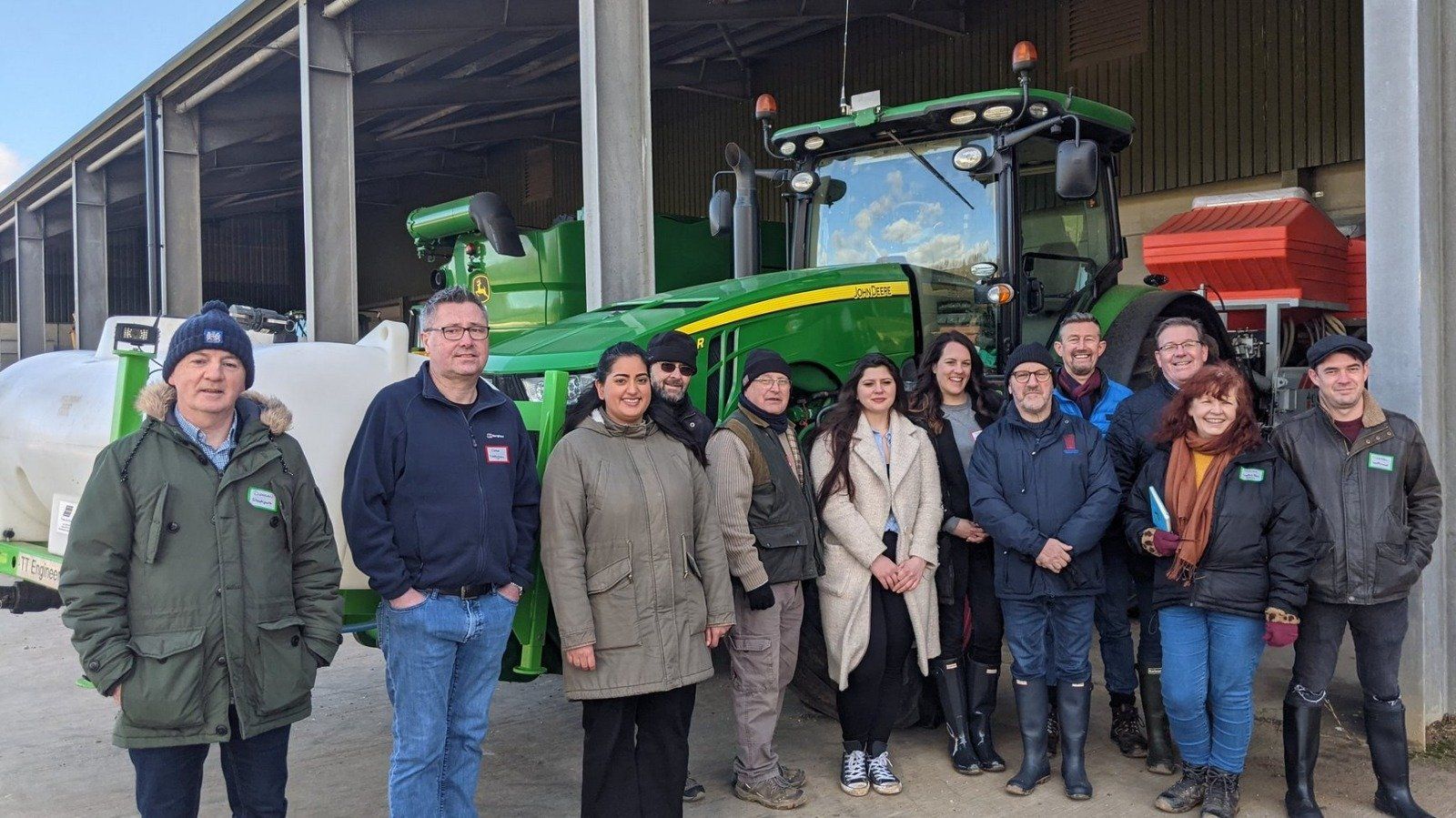
At Ark Summit, we held these conversations on a farm six years into its organic journey, where the lunch on the table had come from the soil we were standing on. That felt like an argument in itself.
The task now is to build that same resilience into the systems around it.
Share:
You may also be interested in...