The Source
Beautiful writing about delicious British food. Articles, comments and musings from our contributors.
20 years, 20% growth – why trusted suppliers are the backbone of Local Food Links
As the 2026 summer term ended, Local Food Links undertook one of the most significant periods of growth in its 20-year history.
By stepping in to support seven primary schools and a pre-school needing a new meal provider from September, the not-for-profit public sector caterer will add more than 1,000 meals to its daily operation and grow the business by around 20%.
To meet this demand, chief executive Caroline Morgan and her team created a new production kitchen in Weymouth in just seven weeks.
This will take Local Food Links’ network of Dorset hubs to four, enabling the organisation to deliver more than 6,000 school meals every day of the new academic year.
Yet behind the recruitment, equipment installation and operational planning is something that cannot be created at short notice – a dependable supplier network built over two decades.
A new kitchen in seven weeks
When Local Food Links first heard the schools might need an alternative provider, Caroline quickly realised there was sufficient demand to make an additional kitchen viable.
“We couldn’t just leave them, but turning the new kitchen round over the summer was quite a challenge,” she says.
“We’d normally plan these types of projects a year in advance, giving us time to secure grant and loan funding, appoint a project manager and design a large hub kitchen from scratch.”
Thankfully, a supportive landlord helped the team identify a suitable unit which could be adapted quickly.
The new space will primarily produce puddings and packed lunches, moving those activities out of the existing Weymouth hub and releasing valuable capacity for main meals.
The current Weymouth kitchen prepares around 2,200 meals a day, offering pupils a choice of three main dishes and a pudding, as well as producing packed lunches for school trips and other activities.
Moving some of that work to a dedicated unit will allow the main kitchen to accommodate an additional 1,000 to 1,200 meals.
The new kitchen is expected to produce between 3,000 and 3,500 puddings each day, while operating with its own storage, washing-up and delivery facilities.
Growing without compromising quality
For Caroline, maintaining quality during such rapid growth is about applying established systems on a larger scale.
“Our team is used to very big numbers. It will be the same recipes, just bigger pans, more ovens and bigger mixers,” she adds.
The timetable left little opportunity for the tasting events Local Food Links would normally organise when welcoming a new school.
Instead, the central administration team has worked at speed to register pupils, provide families with access codes and introduce parents to the organisation’s bespoke online ordering system.
The team has already visited the schools and met staff, with more face-to-face engagement planned once the new service is established.
Caroline is also confident Local Food Links’ multiple local suppliers can accommodate the 20% increase.
These relationships have been developed over many years and include a local butcher supplying 100% British meat, a free-range egg producer near Sherborne, fruit and vegetable businesses and an orchard growing heritage apple varieties.
The latest expansion demonstrates why these relationships matter.
A robust school meal service is not created solely through buildings and equipment.
It relies on suppliers that communicate clearly, respond quickly and understand the pressures facing public sector caterers.
Managing the less predictable side of summer sourcing
Summer menus bring colour and variety, but fresh produce can be unpredictable.
For example, Local Food Links has experienced occasional quality issues with pineapple and melon.
Because the condition of the fruit may not become apparent until it is cut open, problems can be particularly challenging at cook-chill schools where whole fruit is delivered for preparation on site.
When an issue is reported, suppliers need to respond quickly so replacement produce can reach the school in time.
Jacket potatoes can also become more difficult to source towards the end of the growing season, when older potatoes may no longer deliver the quality required.
These practical realities reinforce the importance of open communication between kitchens, schools and suppliers.
Seasonal sourcing involves planning for ripeness, storage, delivery schedules, preparation and the time between production and service.
Summer favourites
Despite an exceptionally busy end to the academic year, the kitchens have continued to introduce new flavours alongside familiar favourites.
One of the biggest successes has been Korean-style barbecue pork served with 50/50 brown and white rice, vegetables and a bao bun.
“The children absolutely loved that,” Caroline says.
Chicken or Quorn kebabs with warm flatbread, rice, garlic mayonnaise and grated carrots have also proven popular.
A summer ploughman’s lunch has been well received by pupils, although Caroline acknowledges that its many individual components make it more demanding for serving teams.
The organisation’s 20th anniversary has also been marked with celebration cupcakes, alongside football-themed versions which have been particularly popular with pupils.
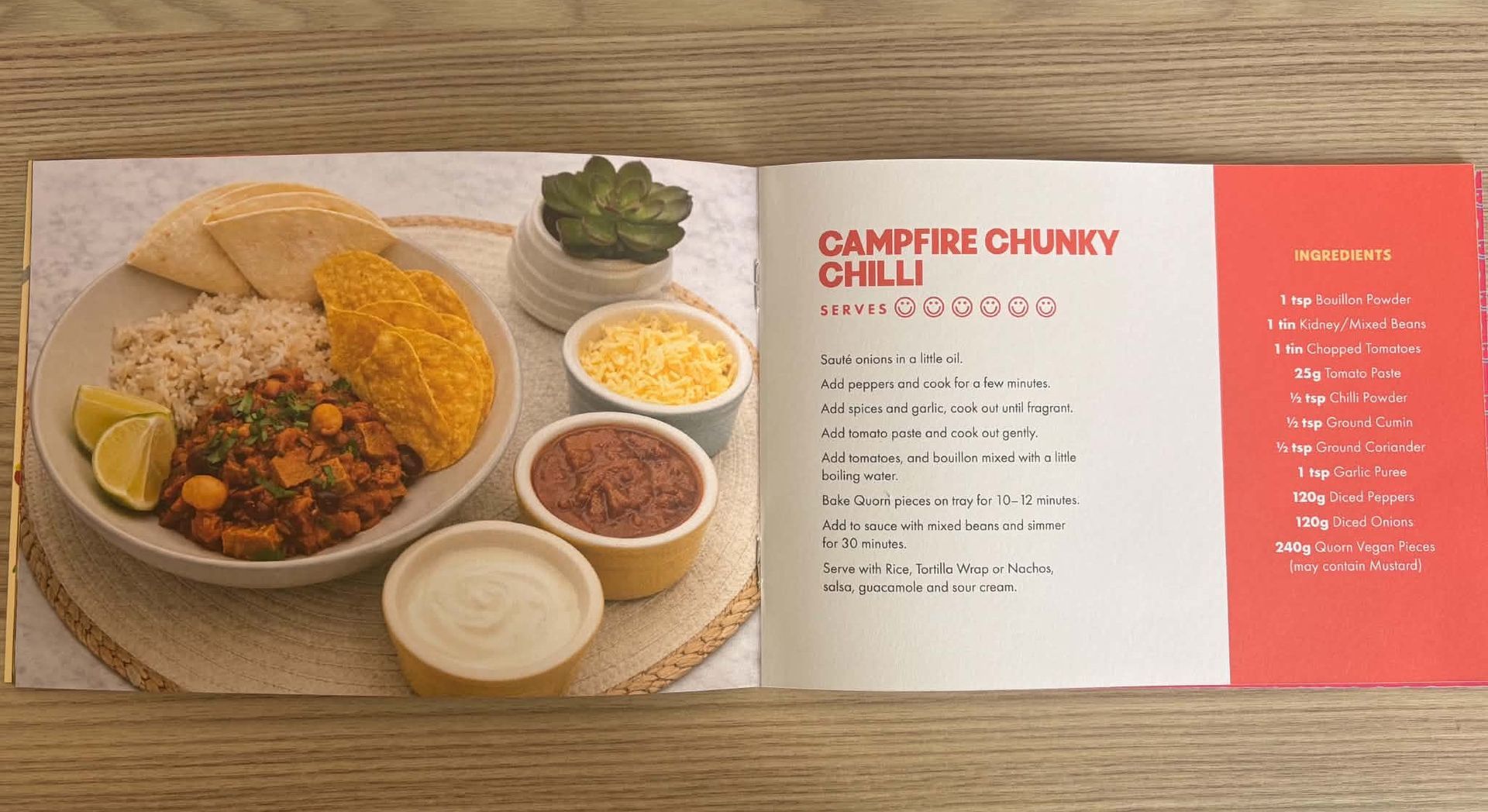
A commemorative cookbook created for the anniversary has now been printed and will be distributed in September.
Preparing for an uncertain September
The autumn menu went live over the summer, allowing families and schools to place orders ahead of the new term. These increased by thousands each day during the final week of August.
However, exact demand was difficult to predict at the time.
Schools and families were still navigating changes to free school meal eligibility, while revised School Food Standards will come into force in primary schools in the 2027/28 academic year.
Local Food Links continues to test how proposed changes might work in practice.
Fresh fruit medleys are already offered, but preparation can create additional work for school teams, while children accustomed to a combined fruit and baked pudding may be less enthusiastic about fruit alone.
Should the new standards require a greater proportion of fruit-only desserts, Caroline believes change will need to be introduced gradually, giving children, schools and kitchens time to adapt.
Celebrating British food
British Food Fortnight will provide an opportunity to place British ingredients firmly at the centre of the autumn menu.
Planned dishes include British beef Bolognese, roast loin of British pork, Somerset cheese and tomato pizza, Red Tractor British beef meatballs, roast Dorset gammon, chicken tikka masala and oven-baked fish and chips.
The menu combines familiar school favourites with a clear message about provenance, reflecting Local Food Links’ long-standing commitment to using British ingredients wherever practical.
For an organisation celebrating two decades of rebuilding school food provision across rural Dorset, 20% growth is evidence of the value placed on a service rooted in trust, partnership and a shared commitment to feeding children well.
Take a look at the other Inside Britain’s Sourcing Story blogs [LINKS]
Share:
You may also be interested in...