The Source
Beautiful writing about delicious British food. Articles, comments and musings from our contributors.
Julie Donaldson, Menu Analyst and a member of the Love British Schools Working Group

Responsibilities
I am the menu analyst for both the primary and secondary school menus across the city to ensure that they meet the Food and Drink in Schools (Scotland) Regulations 2020 Act standards. My duties include menu planning, special diets, the online parent booking system, web publication of the menus, food safety, as well as some business support. We hold the Food for Life Bronze award in all our schools and work with the Early Years settings on the ‘Setting the Table’ model.
How many schools do you provide catering services for?
We provide over 22000 meals every day across 97 schools in the city. This is made up of 77 primary schools, 8 special schools and 12 high schools. As well as this, we provide lunches to 95 Early Years settings, of which 6 are Forest Kindergartens. We also have 2 commercial buildings and provide lunches to some lunch clubs across the city.
Facilities
We don’t have any central production kitchens in Edinburgh however, this is something we are exploring as this will ease the pressure from some of the larger/high numbered production kitchens who can on a busy day, transport out over 500 meals.
Of the 77 primary schools, 41 of them are production kitchens with full facilities on site with the remaining 36 being dining centres which have their lunches transported in from one of the production kitchens daily. All Early Years meals, including the 6 Forest Kindergartens are also transported in from a production kitchen which as you can imagine, can have some logistical difficulties.
Edinburgh is a very large, busy and difficult city to drive around. To try and help minimise the transportation time between a production kitchen and dining centre and/or early years settings, the catering department is divided in to 4 different localities. Over the last 5 years we have invested in new technology to aid the quality and freshness of these meals.
Farming hinterland and availability of local produce
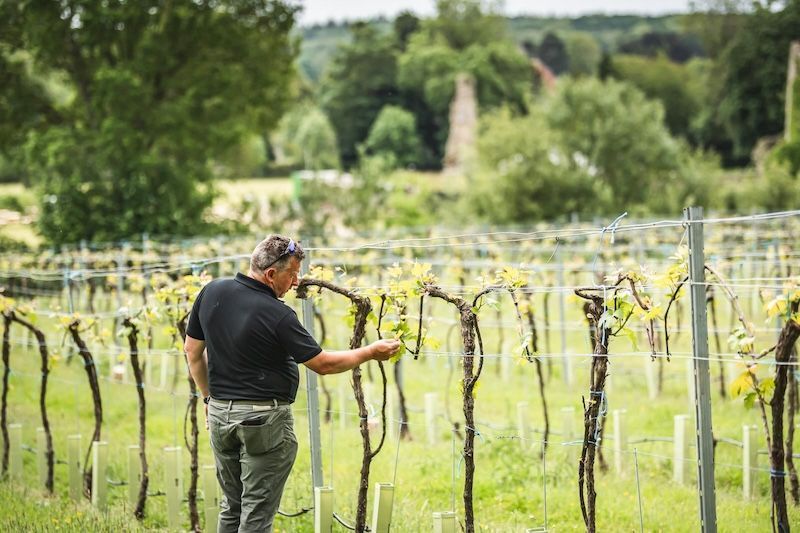
We try to use local produce where possible. Our fruit and veg suppliers, George Anderson’s and Sons are very local to us and delivered to us from their farm and distribution centre in East Lothian. Throughout the Veg Power campaign we worked closely with Andersons and seen an increase of 11% in consumption of veg over the 5-week program. We use Campbells as our fresh meat supplier who are based in Linlithgow, and we use milk from Muller whose distribution centre is located in Mid Lothian, and we only use Scottish milk. We use a local baker, breadwinner who is just 10 miles from every school.
When we must source products nationally or through our main distributors, we ensure all red meat is QMS (Quality Assured Scotland), all our meat and poultry is British (Red Tractor) and our fish is MSC certified.
How long have the local supply chains been a priority?
Local supply chain has been a priority for many years, and we work closely with out procurement department to try and incorporate as many local supply chains as possible. We worked with the larger national suppliers to provide the “wheels” for some smaller suppliers who may have difficulties distributing.
Logistics and distributions
We don’t tend to have any problems getting food delivered to our schools by our main distributors. For the delivery of school meals, we work closely with a transportation company who collects the meals from the production kitchen and distributes them to the dining centres and Early Years settings. Traffic, roadworks and just navigating through Edinburgh in general can be difficult to say the least, but the meals are delivered in plenty of time. The Forest Kindergartens can throw up some curve balls as they tend to be off grid but working closely with our transportation company has made this a relatively easy process to deliver.
Budget per head
Due to the challenging economic times we are facing, there huge are fluctuations in the cost of raw ingredients. This makes it challenging to give a detailed cost per head. Our menu is balanced over a 4-week period. There are some days which are cost effective, but this is balanced out by days where a more expensive provision is offered.
Lessons learned and top tips
Good working relationship with your suppliers
Working closely with our suppliers and staying in regular contact with them has helped to minimise stock shortages and to organise substitute products at very short notice throughout the covid pandemic, allowing us to still safely deliver over 20000 meals per day.
We also try and visit local suppliers regularly and promote opportunities for our staff to visit distribution centres, farms etc.
Maintain good communication with your staff
We have and continue to have a great communication stream with our staff. Keeping them in the loop on all covid related guidance as well as the availability of stocks has helped keep the service moving and minimised any disruption.
Share:
You may also be interested in...