The Source
Beautiful writing about delicious British food. Articles, comments and musings from our contributors.
Jane Peyton is Love British Food’s drinks ambassador. She is the UK’s first accredited cider sommelier, and founder of the School of Booze. Jane’s online courses for cider, beer, and wine knowledge offer excellent introductory education.
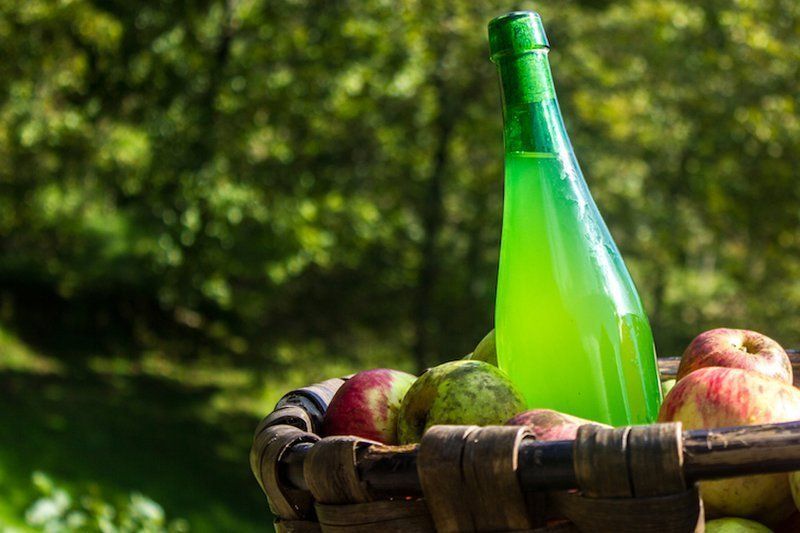
When I suggest to people that cider matches well with food many often agree that apples and pork complement each other but then ask what other foods to consider. My answer is that with wine we do not muse about what food goes with grapes and it is the same with cider and apples. Think instead about the acidity, tannins, sweetness and texture of the cider, the way we use those same properties to choose a wine to go with our meal. Cider is a versatile drink that comes in a number of iterations such as single varieties, blends, still, sparkling, tannic, acidic, dry, sweet, and ultra-sweet. There is a proviso though, when choosing a cider to match successfully with food, the ones made from freshly pressed apple juice, rather than the mainstream brands made from concentrate with added sweeteners, and other additives because the latter do not have the necessary tools for a really sublime match.
Tannins are compounds derived from plant material that add structure and texture to cider. They register in the mouth as dryness. Think of the drying nature of a cup of black tea – that is caused by tannins. Tannins have a very useful ability to attract fats and proteins in food. This means that tannins help to cut through the texture of dense and/or fatty food and refresh the mouth. Cider made from cider apples will contains higher levels tannins, whereas cider made from eating or cooking apples will have lower amounts of tannins, and instead acidity will be dominant. Acidity cuts through texture and the richness of food, and balances flavours. It also cleanses the palate. Sweetness acts as a contrast to savoury and salty food, calms down spiciness, and complements desserts. Carbonation is very useful too as it clears the palate and cuts through the texture and richness of food, making the mouth ready for another morsel.
Here are some guidelines on cider and food matching. The mantra is:
Co-ordinate: Think about the texture and density of food and match the cider accordingly, for instance, lighter foods with a light bodied cider.
Cut: Choose cider with either tannins and acidity, or both, to cut through texture, flavour, richness, and fattiness.
Complement: Cider that complements the flavours of the food. For instance, savoury cider with an umami rich cheese.
Contrast: Choose a cider that is a complete contrast to the food. For example, sweet cider with salty food such as anchovy.
Matching Tips
- Match flavour intensity - delicate cider with delicate food, big cider with big foods.
- Consider the texture of the food when choosing the cider - light texture such as sushi with lighter bodied ciders, the more solid the food, such as game, the bigger the body the more tannins are required.
- Match the cider with the main part of the dish rather than the accompaniments unless it is a dish where sauce is a major component, in which case think about the flavours and intensity of the sauce.
- Alcohol is a flavour enhancer so higher ABV ciders will intensify flavours in the food and can make them unbalanced. Avoid high alcohol ciders with spicy food.
- Salty foods can make cider taste bitter and can take away the fruitiness. Salt clashes with tannins but works well with acidity.
- Bitter foods – avoid tannic cider, it will increase the bitterness of the food.
- Spicy foods – avoid tannic cider as the tannins are bitter and bitterness increases spiciness.
- Acidic foods – pair with an acidic cider. If the cider is less acidic than the food then the cider will taste bland.
- Sweet foods – the cider should be sweeter than the food otherwise the cider will taste bitter.
Cider goes equally well with fine or casual dining. And one further thing to consider for the dining table. No pint glasses. Ever. Nature did not grow those exquisite apples only for the cider to be served in the equivalent of a bucket. Wassail!
Share:
You may also be interested in...