The Source
Beautiful writing about delicious British food. Articles, comments and musings from our contributors.
The British apple season is in full swing and at New Covent Garden Market (NCGM), an Official Partner of Love British Food, in Nine Elms, London, it’s always a special time of year.
Sarah Calcutt is currently a Non-Executive Director of the Covent Garden Market Authority (CGMA), which manages NCGM. She is also Operations Director of British Apples & Pears and has family connections to the Market that stretch back several decades, so is pretty well versed in the relationship between the British apple industry and the country’s wholesale markets.
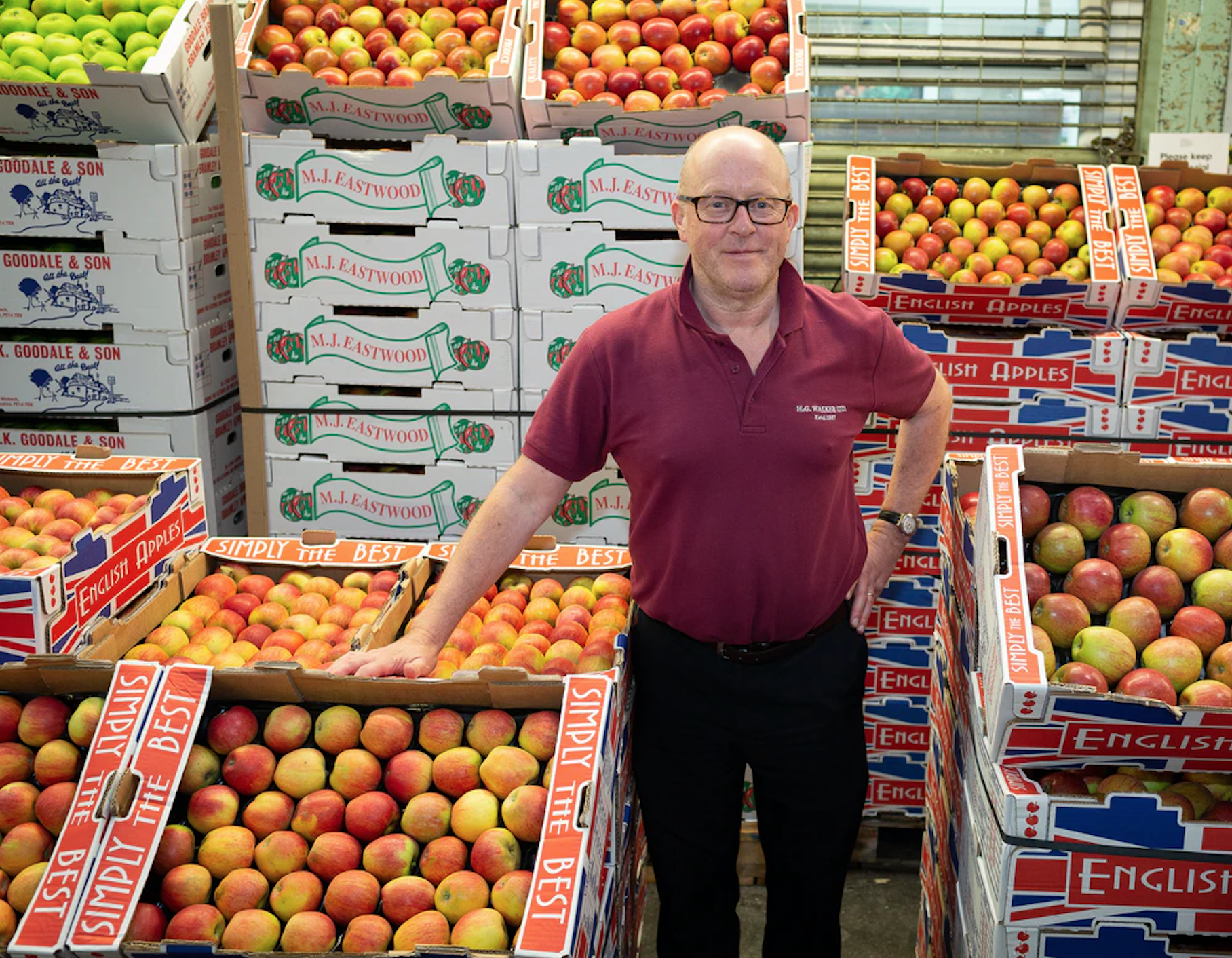
Sarah’s family’s connections with the fruit, veg and flower market go back decades, though, and her own experience stretches through four decades, to the time her father Bill took her to market to sell the fruit they grew on the family farm.
Her grandfather John Lawrence was a market gardener and farmer in Cranbrook and delivered trucks of berries, asparagus and apples into the old Covent Garden several decades prior to that. During World War II, when the market was particularly crucial for delivering food to the nation, deliveries were made by her grandmother Mary, while John served in the RAF.
“He ran a packing operation with other growers and also supplied customers in what is now Western International market, which was then in Brentford,” Sarah remembers. “The apples and pears were packed directly into bushels and sent straight to market, twice a week. After the war Mary ran a greengrocers in Cranbrook, so when that JH Lawrence truck went up to Covent Garden, she would go up and buy from the market too – it was a lovely two-way relationship.
“I first came to the market in the cab of my dad’s truck when I was about 10. In those days, everyone had a mixed farm and we also grew apples and hops, but it was the sale of our redcurrants, blackcurrants and whitecurrants that created crucial income to pay the wages at the start of Apple and Hop picking because they were very high value and that money worked hard for us.”
The UK market has changed, but says Sarah, wholesale markets retain an extremely important role for British apple growers of every size. You can promote your own brand and name through a wholesale market and its customers in a way that just isn’t possible any more with the national supermarket chains, every single one of which has their own brand in the fresh produce aisle. By having a recognisable brand, you have the opportunity to connect directly with the people who eat your fruit, attract them to your website or social media channels and tell your own story. That is very valuable.”
The mainstream retailers’ apple offer is predicated on imports, as less than 40% of the fruit we eat as a nation is grown here. The supermarket chains ask for fruit that fits into specific size bands and that means there is plenty of fruit grown that needs to find a market. “Several apple and pear growers don’t sell into the mainstream high street retailers at all, but it’s true that every company that markets British apples sells a proportion of their crop each year to their British wholesale market customers, who then sell them to the nation’s greengrocers, street market traders and restaurateurs. Independent greengrocers, as a general rule, prefer the bigger sizes that stand out on their shelves and which kitchen wouldn’t rather have to peel two Bramley apples than three? The fruit is the same quality, it has just the same flavour and texture – but it doesn’t fit the sizing requirements for a supermarket pack.”
Premium customers
NCGM is the iconic wholesale market brand in the UK and Sarah believes it has a unique place in the supply chain. “In my opinion, New Covent Garden Market has always been the place where you’d supply the cream of your crop. The traders do not have the option of selling poor quality fruit, because such a large volume of what they sell goes to the restaurant and hospitality sectors. No grower will have a lasting relationship with their customer in the market if they consistently deliver fruit that doesn’t meet their premium expectations. The market traders are real experts in a huge range of products, not all of which are British of course as we’re not a self-sufficient nation, but the British label is very important to them,” she says.
The market drives trends and menu changes across London and the South East, Sarah adds, giving an example in another sector to illustrate her point. “I’ve worked with Westlands, in Evesham, which produces an amazing range of British microleaves, microgreens and edible flowers, and their relationship with NCGM is vital for them, because from the traders there, they glean so much information about current and future trends and that enables them to constantly adapt their own flavours and products to match evolving demand. It’s another great example of that symbiotic relationship between those who have the plate and those who have the farm.”
This British apple season
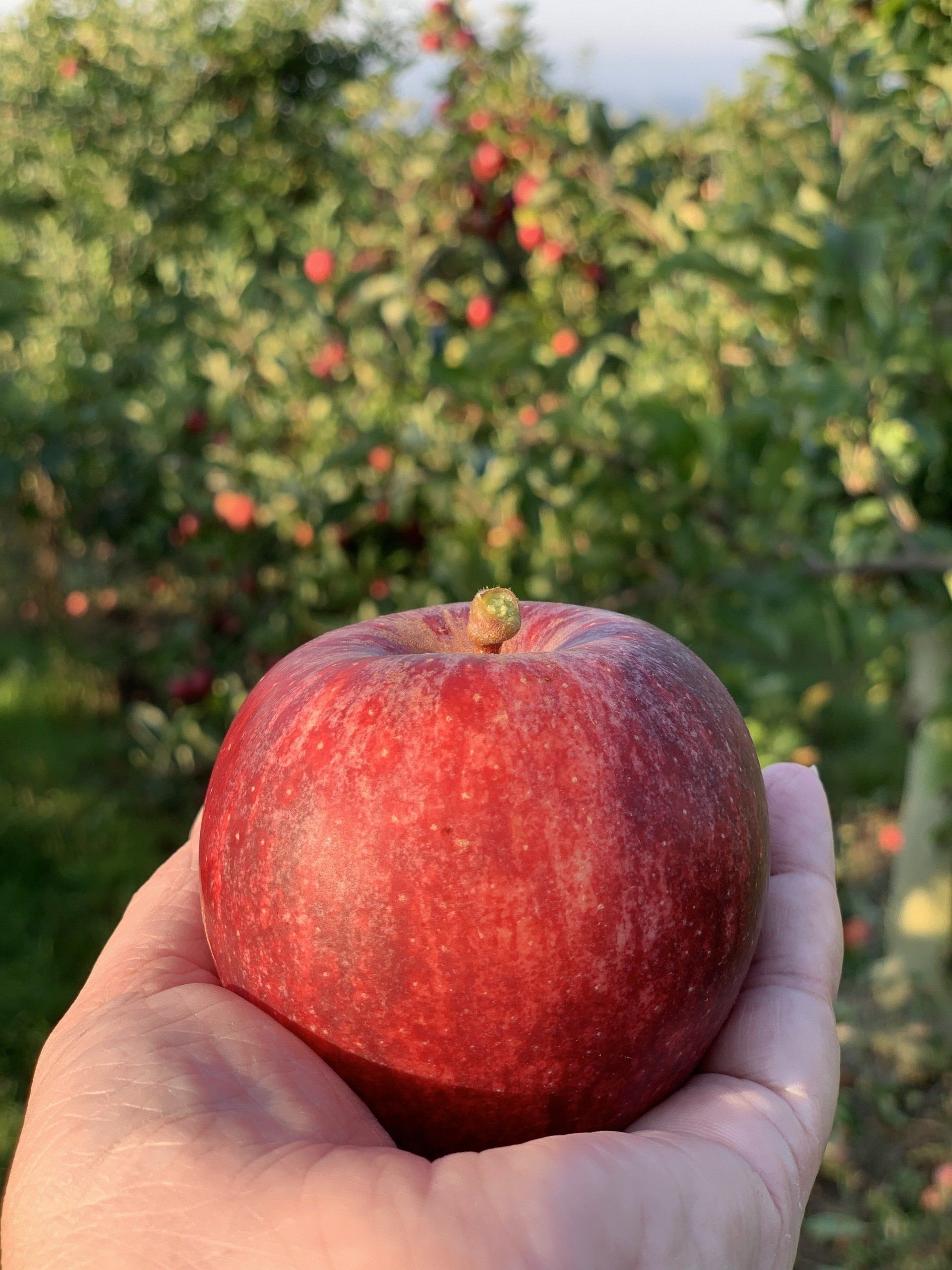
This year, British apples and pears are set to be more juicy than might normally be expected, because after warm weather early in the growing season, most orchards were hit by prolonged periods of wet weather. “Our maritime climate is fantastic for the flavour of our apples,” says Sarah. “Raymond Blanc is one of our ambassadors and he eulogises about the flavour and is very happy to say that British apples taste better than apples from anywhere else.
The British apple season is officially launched on October 4th, as British Apples & Pears marks the beginning of peak volumes arriving on the market. However, there have been homegrown apples around since early August and during British Food Fortnight your local greengrocer will no doubt be stocking one or more of the following varieties: Early Windsor, Red Windsor, Spartan, Cox, Gala, English Bramley and the delightfully and accurately named Scrumptious.
Lockdowns and health concerns have both led to British consumers buying more apples. “The last 18 months have been extremely positive for apples,” reports Sarah. “So many people have been buying less frequently and therefore the more perishable fruits have become slightly less attractive while apples, which will last that bit longer in your fruit bowl, have become more practical.
“There is also so much evidence out there now about how beneficial apples and pears are to gut health; they are also naturally fat free and keep you fuller for longer. An apple contains 77 calories, the equivalent of six crisps and if you swapped an apple for crisps every day for a month, you’d be eating 3,120 less calories,” she says.
“That type of information is changing people’s purchasing habits too. It’s said that if you change habits for three months, you have probably changed them for life, so a lot of the changes people made during the pandemic will stick for the long term.”
For a full rundown of what’s available and when throughout the British apple season, click here. If you want to go one step further and find our which variety best suits your personal taste profile, click here.
To find a wholesaler to suit your requirements at New Covent Garden Market, click here.
Share:
You may also be interested in...