The Source

Beautiful writing about delicious British food. Articles, comments and musings from our contributors.

Inside Britain’s Sourcing Story winter edition – Local Food Links

Feeding Dorset – The local sourcing story behind 5,000 school meals a day

We caught up with Local Food Links chief executive, Caroline Morgan to discuss how the

business has expanded over the past twenty years and what they’ve been serving over the

winter months.


Prior to Local Food Links being established, hot school meals had disappeared in Dorset for

over two decades, with every child bringing in a packed lunch or receiving a free school

meal.


Meals were initially supplied one day a week, then two, then three. Eventually, the service

expanded to the full school week – a shift that required significant operational changes.

Home-style cooked lunches are now prepared in three kitchen hubs based in Blandford

Forum, Bridport and Weymouth.


Depending on their requirements, schools either receive a delivered-in hot or cook-chill

service with meals delivered the day before or early in the morning to be reheated on site.

Having this flexibility has enabled Local Food Links to double the number of schools they

work with by maximising the kitchen hubs’ capacity.


Winning schools over

Following the extended absence of hot meals for pupils, Caroline says that the concept

wasn’t really seen as an integral part of the school day.


“We had to convince lunchtime teams, school secretaries, and headteachers that it was

going to be a good idea,” she reflects.


“We developed our own online ordering system, as the initial method with spreadsheets was

unmanageable. Now, we’re on our third iteration of a bespoke system that links parents with

schools and kitchens. Its development has been a collaborative process; we provide training

to onboard new schools and their lunch-time teams.”


The introduction of free meals for infants (Reception, Year 1, and Year 2) in 2014 was a

gamechanger.

“It made hot lunches seem normal again and really helped enhance people’s perception of

school meals.”


Most of the schools Local Food Links deliver to are located in small villages, with only six out

of the 59 schools serving more than 150 meals a day.


While logistics can be challenging, Caroline stresses their commitment: “We have never said

‘you’re too small, we’re not interested,’ to a school and I don’t think we ever would – after all,

every child needs to eat.”


Celebrating local suppliers

Over the years, the enterprise has built strong relationships with many small-scale, local

operators such as their free-range egg supplier based near Sherborne and a local butcher

supplying 100% British meats.


“Our smaller suppliers are always our favourites because they're so reliable in a crisis and

always deliver when needed,” Caroline explains.


Local Food Links works with several fruit and vegetable suppliers, sourcing as locally as

possible.


“There’s a fantastic orchard growing heritage apple varieties. Smaller apples are ideal for

primary-aged children, whereas supermarkets tend to prefer larger fruit, so the relationship

works perfectly.”


Baking goods come from a Devon-based cooperative, Bako, while Hunts, also in Sherborne,

supplies ambient food and drink. Prices are checked monthly and orders adjusted based on

price and availability.


“Our catering manager, Barry Dovell, does this to keep costs competitive. As the business

has grown, we do occasionally use bigger suppliers, however price and quality remain

critical.”


Trust is central to supplier relationships – something tested in the past when a former

butcher repeatedly delivered imported meat.


“British meat is non-negotiable for us, even though budgets are tight. If trust breaks down

with a supplier, that’s the final straw. We’ll always work with those who meet our standards.”


That same commitment to standards and transparency runs through menu development.


Seasonality in action

Barry leads menu development before it’s reviewed by the kitchen teams, to make sure it

works logistically in terms of ordering ingredients and factors such as storage space.


The team work to a seasonal half-termly menu, with two rotations every three weeks.


Every Wednesday is roast dinner day, and there’s a weekly Fish Friday. Some items remain

consistent throughout the year and have become firm favourites with the children.


Every day there are three options to choose from including a vegetarian meal and a third

‘safe’ option, such as a jacket potato or a baguette.


The winter menus featured hearty meals like lasagne, roast beef and Yorkshire pudding,

cottage pies, sausages, and macaroni cheese made with local cheddar.


“Everyone loves the sausages, they’re so popular that parents ask where they can buy

them!”


Winter challenges typically involve sourcing fresh produce. This year, jacket potatoes proved

problematic due to poor growing conditions.


Transport can also affect quality. Broccoli, for example, does not travel well, while peas and

sweetcorn are more resilient.


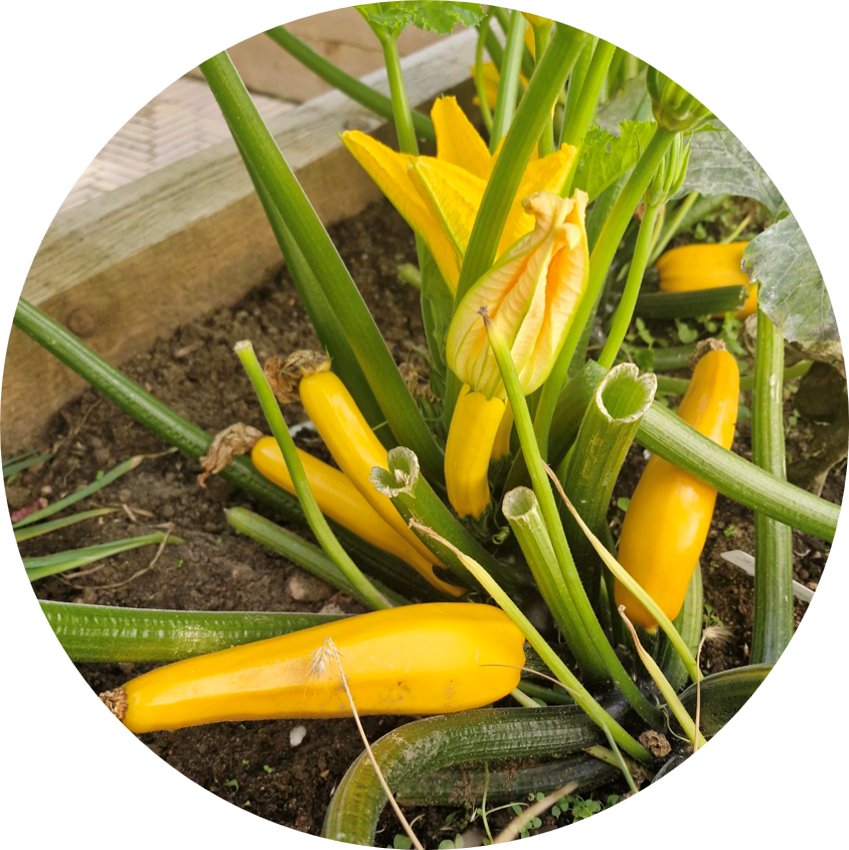
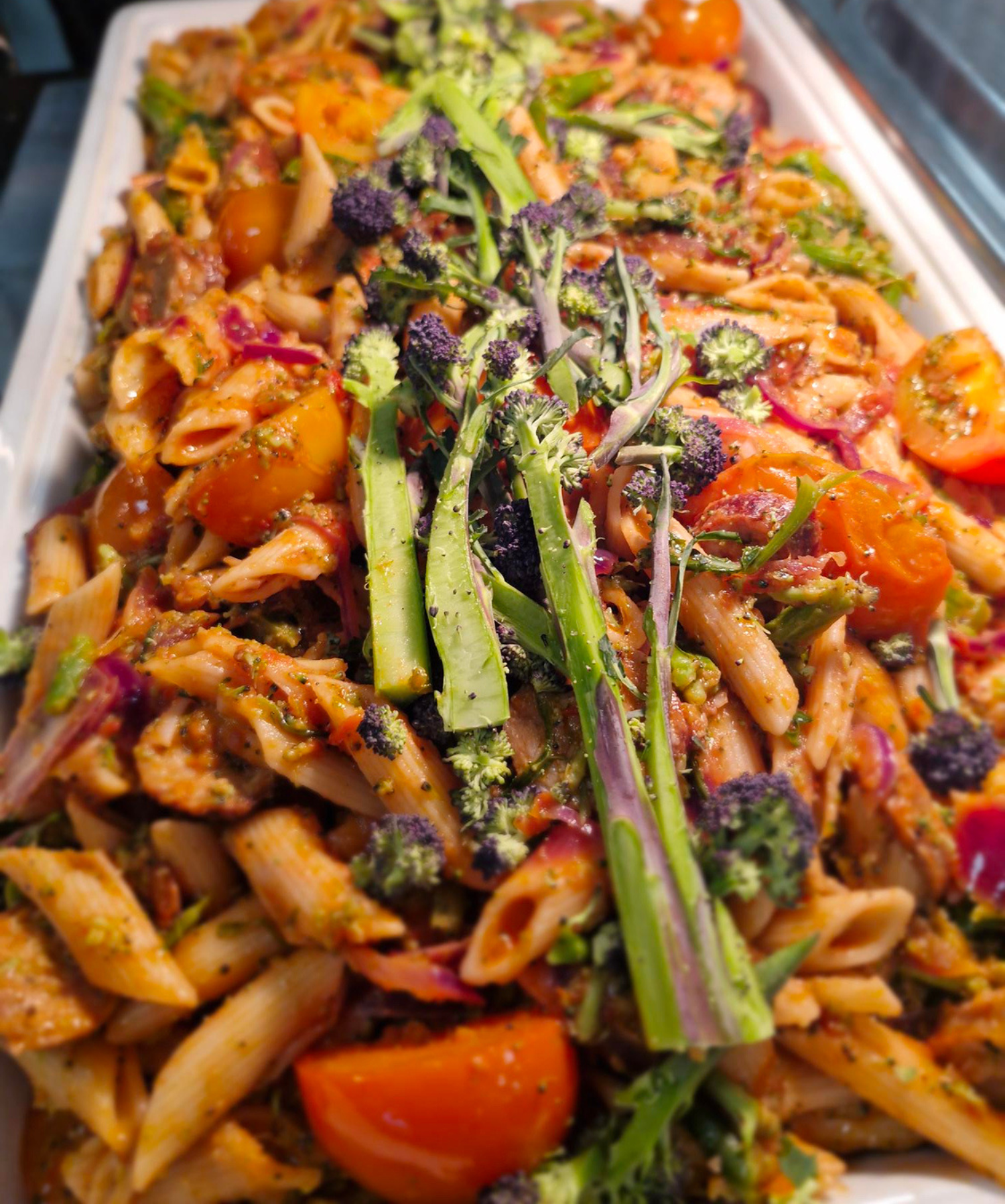
Vegetables are often incorporated into sauces, with courgette, butternut squash, onion and

garlic blended into tomato bases for pasta, pizza, casseroles and curries. Another winter

success has been roasted vegetables in puff pastry.


Caroline is passionate about introducing children to new flavours.


“The Watercress Company is based in Dorset, and we trialled a watercress soup in January.

We also tested jackfruit for the first time – that one probably won’t return based on feedback!

But you have to try these things.”


One particularly successful trial involved a blind tasting of beef versus venison Bolognese.


“We invited Year 5 and Year 8 pupils to take part. Some didn’t know what venison was, and

a few chose not to try it. But those who did overwhelmingly voted for the venison.”


The trial followed an introduction to West Dorset Wilding through Love British Food founder

Alexia Robinson. The game specialist hopes to supply public sector caterers.


“If children enjoy venison, there’s no reason not to include it,” Caroline says. “You can have

fun and try new things – just don’t mess with the dishes they really love.”


Nutrition matters

All recipes comply with government school food standards, including limits on oily

foods, requirements for fruit-based desserts and guidelines ensuring variety across

carbohydrates and proteins.


Careful menu planning ensures balanced meals while maintaining flavour and familiarity.


“I regularly send the simplified school food standards to people to better help them

understand why and how our menus are developed as they are. Variety is really important

and it’s great to be able to showcase the foods that we grow in this country,” she adds.


Ongoing dialogue

Feedback from schools is taken seriously. Each day, a portion guide is supplied, detailing the

number of meals, vegetarian requirements and allergen information. Feedback is collected

and reviewed every month to refine menus and ensure meals are being well received.


Training is given to lunchtime staff, and Caroline has termly meetings with schools to ensure

each partnership is working effectively. A dedicated team member also oversees school

liaison, gathering direct feedback from pupils and staff.


“We work hard to be seen as genuine partners,” Caroline says.


Weathering the storm

This winter, flooding has caused significant disruption, with some schools closed for up to

three days due to road closures.


“Our drivers always try to find alternative routes, even if deliveries are slightly later than

usual. We budget for the occasional ‘snow day’, but flooding can still present challenges.”

Closures can affect finances depending on notification times.


“If we’re told before 3pm the previous day, there’s no charge. After that, preparation may

already have begun, which can lead to waste. We always try to redirect food elsewhere to

minimise that.”


Looking ahead

This year marks the 20th anniversary of Local Food Links and plans are underway to create

a commemorative recipe book for each of the 9,500 pupils.

“It will feature the dishes children love most and encourage them to recreate them at home,”

Caroline says.

“Food is really important and we want to nurture pupils’ love of great British ingredients and

for them to develop lifelong healthy eating habits.”

After two decades, Local Food Links is not simply serving meals, it’s rebuilding a culture of

school food in rural Dorset.


Share:


You may also be interested in...
By Alexia Robinson March 16, 2026
Inside Britain’s Sourcing Story winter edition – Milton Keynes University Hospital From field to ward – putting British produce at the heart of winter recovery Love British Food caught up with Frank Fiore, catering manager at Milton Keynes University Hospital (MKUH) to learn more about his successful seasonal winter menu and the sourcing strategy behind it. Patient meals at MKUH are delivered plated and chilled before being cooked at ward level. While the hospital does not operate a large-scale fresh cook patient kitchen, Frank believes the model offers consistency, something that is vital in a hospital setting. “We’re often meeting complex dietary requirements, so consistency is fundamental,” he explains. “We use two different suppliers. Steamplicity provides our fresh, chilled meals, and Maple fine foods who supply our high-quality textured and modified meals. I’m pleased to say our patient feedback is always very good.” Ward-based catering teams interact daily with patients, taking orders electronically, serving meals and drinks, and ensuring individual nutritional needs are met. Alongside this constant dialogue, patients can provide feedback via QR codes printed on menus or through paper questionnaires. “It’s really important that we keep that feedback loop open,” Frank says. “Food is an integral part of the patient journey.” Winter warmers One of the biggest developments this winter has been the installation of new catering equipment, enabling the team to introduce freshly made soups using British-grown seasonal produce from local fruit and vegetable merchant AB Fruits. “Our approach is really flexible,” Frank explains. “The huge benefit is that I can change what soup we’re making based on the ingredients available that day. That’s one of the great things about sourcing locally.” Previously, patient soups were bought in. Now, by blending supplied meals with fresh in- house production, Frank has been able to inject a new level of quality and seasonality into the offering. “I’ve introduced a blend of supplied and in-house catering for patients because injecting fresh cooking into our offer is really important.” Over the winter months, soups have included leek and potato, country vegetable, carrot and coriander, mixed bean and pasta, mushroom and cream of tomato – all made using seasonal British vegetables. Frank says this is only the beginning. Plans are underway to introduce freshly made custard and porridge, with close involvement from the hospital’s dietetic team to ensure recipes meet fortification and nutritional standards. “Meeting patients’ nutritional needs is key,” he says. “Our dietitians are involved in recipe development, particularly where fortification is required.” Food for the body and mind Meals served in a hospital environment carry emotional weight as well as nutritional importance. Frank is a firm believer in offering traditional comfort dishes such as cottage pie, food that feels familiar and reassuring. “Food can be a positive trigger, and we want patients to look forward to mealtimes when they’re in hospital,” he says. “The number of times I’ve heard someone visit a patient and ask, ‘What did the doctor say?’ and then immediately follow it with, ‘What did you eat today?’ It happens all the time.” For Frank, food is more than sustenance. “It’s essential that patients eat healthy, nutritious food. If it looks good and tastes good, they’re more inclined to eat it. Food is one of the best natural medicines we have – especially when you’re in hospital.” Fuelling NHS staff Hard-working hospital staff enjoy freshly cooked meals prepared from scratch on site in the staff restaurant. Frank delivers regular themed menus that showcase flavours from around the world using locally sourced ingredients. “We have a traditional mains counter where we would serve something like a beef casserole in the winter. And then we have a street food counter showcasing global flavours. We regularly feature an Indian day, an African inspired day, an Italian day, and a traditional British day. “The staff menu runs on a three / four-week cycle, but nothing is set in stone. We can change it based on what our fruit and veg man and our butcher can source. “One of the key things I have experienced working in an NHS kitchen is that you can be flexible. You can express your creativity as a chef,” adds Frank. Supplier relationships Sourcing British produce is deeply embedded in Frank’s philosophy, something he attributes to his upbringing. “For me, it comes down to building relationships and working collaboratively. Food’s value never just comes down to cost.” Since joining the Trust in 2020, Frank has worked to shorten supply chains significantly. When he arrived, the hospital’s butcher was 130 miles away. Today, MKUH works with The Buckingham Butcher, reducing response times and strengthening accountability. “It means if there’s an issue, it can be rectified within hours. That wasn’t possible before.” AB Fruits, the hospital’s family-run fruit and vegetable supplier located close to the Trust, sources directly from three local farmers. The shortened supply chain has improved both resilience and flexibility. “If you have strong supplier relationships, you can help each other out. AB Fruits even sourced some high protein yoghurts to get us out of a pickle. They’re phenomenal! Having that level of trust also makes planning much more fluid as we speak to each other on a daily basis,” he adds. “Consistency with suppliers is so beneficial, we work with them when it comes to pricing challenges, to mitigate some of those issues. It comes down to loyalty. That might sound old-fashioned, but I think its key to all good relationships.” Seasonal highlights Winter produce has shaped menus across both patient and staff catering. Seasonal ingredients have included leeks, celeriac, broccoli, cauliflower and cabbage, all sourced through local suppliers. Frank’s philosophy is simple. “If I was in Italy, I’d buy Italian local produce. I’m in the UK, so I should aim to buy local produce from British farmers.” That commitment extends to farm visits. Frank regularly visits suppliers and farms to understand growing conditions, crop challenges and seasonal realities. “For example, when you see frost damage on a cabbage crop, you understand what farmers are up against. It gives you perspective. It can also inspire chefs and provide a complete picture of the efforts that go into growing foods that we can easily take for granted. “I believe it’s important to have that level of knowledge to help you shape how you use British ingredients.” Winter challenges MKUH’s souring policy and use of local suppliers ensures that they are resilient to seasonal challenges. “We don’t really experience the knock-on effects because we’re able to react to whatever problem is put in front of us,” says Frank. “Obviously, when it's rained and places have flooded, sometimes our suppliers have come in a bit late, but we managed those situations internally. It goes back to what we were saying before about being flexible enough to be able to do that. “When it comes to procurement reviews, I'm really happy to be vocal when the decision is considered. It's about finding suppliers that are happy to work collaboratively with your specific organisation. So I think that's really important as well.” Healthy Horizons This winter also saw the launch of Healthy Horizons Day, an initiative aimed at inspiring staff and patients to think differently about food and wellbeing. The event brought together AB Fruits, the hospital’s butcher, dairy suppliers, dietitians and personal trainers. Live cookery demonstrations showcased the benefits of seasonal vegetables, lean meats and blended protein cooking. Frank shared his own health journey, having lost two and a half stone through improved diet and exercise. “I wanted to show that change is possible. If I could inspire just one person, that would be enough.” The team showcased new dishes with a focus on nutrition, combining minced beef with pea protein in meatballs, alongside plant-forward dishes such as vegan stir fry. Venison was also showcased for its benefits and is now being trialled more widely on menus. “I'm hoping to continue the Healthy Horizons event throughout the year. I want to inspire people to think about great food as it helps us lead a healthier, better life.” Festive feast Christmas remains a significant moment in the public sector catering calendar. For patients, Frank has worked gradually to increase input into menu development, responding to feedback and enhancing the festive offer wherever possible within NHS frameworks. Improvements include adding pigs in blankets and Yorkshire pudding – classic favourites that patients love. For staff, the Trust delivers a full week of Christmas dinners , covering all shifts to ensure inclusivity. “It’s about recognising the incredible work our staff do,” he says. “They deserve it.” Lessons learned Reflecting on his career in NHS catering, Frank says the most important lesson has been not to shy away from conviction. “If you’re passionate about local suppliers, fresh cooking and inspiring people, just go for it. Ask questions. See what’s achievable.” He credits strong support from within the Trust for enabling innovation. “Food is on everybody’s agenda here. Put yourself out there – you’ll be surprised what you can achieve.” Chef first and foremost Frank’s passion for cooking began early. “Cooking was one of the only things I was told I was good at doing at school,” he says. Working within the NHS exposed him not only to diverse cuisines but also to the complexities of dietary needs and patient care. “You can’t take the chef whites out of me,” he adds. “That passion is still very much there –100%.” As winter continues, his focus remains on flexibility, resilience and strengthening local supply chains, ensuring that British produce travels the shortest possible route from field to fork, feeding local patients and NHS staff alike. “I've met so many amazing people through the Hospital Caterers Association and Love British Food. They are all really singing off the same hymn sheet. We've all got the same purpose. The caterers that work in the NHS are focused on making people better with nutritious, delicious food. And I think we all do a pretty amazing job at that.”
By Alexia Robinson March 16, 2026
Inside Britain’s sourcing story Meallmore Care Homes – winter edition How Meallmore is redefining winter dining across Scotland’s care home sector Food plays a crucial role in enhancing the quality of life for all care home residents. As Group Catering and Hospitality Manager across 27 homes in Scotland, Jody Marshall believes high-quality, nutritious meals are central to residents’ well-being and dignity. Love British Food, spoke to Jody about how the care provider approaches winter menu planning, local sourcing and nutritional resilience. Having spent much of his early career in luxury hotels, Jody admits the pressures are different. “Now I'm dealing with somebody's life. It's a completely different kettle of fish,” he says candidly. “This is a much more rewarding sector as far as I'm concerned. You get to make a real difference.” Today, he supports chefs to deliver nutritionally balanced, culturally relevant and dignified dining experiences – particularly through the winter months, when residents are most vulnerable. Why winter matters more in care For Meallmore, winter menus are not just about hearty comfort food. “Winter is when immune systems are under pressure. We look at protein levels, vitamin D, skin integrity, all of it. You can’t just think about calories. You have to think about outcomes,” says Jody. Rather than relying solely on supplements, the team fortifies through ingredients. “We use mushrooms deliberately for vitamin D. We bring in more kale for vitamin K. Protein is carefully balanced across the week. Everything is analysed before it goes live.” Menus are planned eight weeks in advance, with a detailed review six weeks prior to launch to assess availability, cost and nutritional balance. “We’re looking at red meat, white meat, fish, making sure we’ve got variety without overloading the cycle. It’s structured, but it’s not rigid.” Four-week menu cycles provide consistency for residents while allowing for seasonal refresh. ‘Dignity doesn’t disappear in winter’ Before a new menu is rolled out, homes host a structured tasting session known internally as ‘Come Dine With Me.’ “We put the dishes in front of residents and we ask them honestly – do you like it? Would you choose it again?” If a dish misses the mark, chefs are empowered to change it. “We trialled arancini balls. Some loved them. Some didn’t. So we adapted using the same ingredients. That’s the beauty of it – we’re not forcing anything through.” Flexibility extends right up to service. “Dignity and autonomy don’t disappear in winter,” Jody says. “If someone changes their mind five minutes before lunch, that’s absolutely fine.” Texture-modified meals are developed alongside standard dishes, ensuring residents living with dysphagia receive the same experience – just adapted safely. “It’s not about separate food. It’s about inclusive food.” It’s an approach that is mirrored at service, with linen napkins and residents choosing where they sit to eat. Procurement strategy – putting Scottish first With all Meallmore’s homes based in Scotland, sourcing locally is both a practical decision and a matter of principle. “Supporting Scottish producers is really important to us. Some of our residents are farmers and fishermen. They ask where their food comes from – and rightly so,” explains Jody Throughout the winter months, Scottish beef, lamb and pork remain staples on the menu. Potatoes are sourced from Aberdeenshire where possible, despite seasonal challenges around sizing. Eggs must carry the British Lion stamp, which Jody describes as a non-negotiable safeguard. Root vegetables such as kale, celeriac, turnips, Brussels sprouts and cabbage form the backbone of winter sides and soups. Venison has become one of the most notable success stories. Sourced from the Highlands, it now appears on menus twice weekly, sometimes three times, having previously featured just once a week. Jody notes that venison is currently commercially competitive with beef, while offering a lean, iron-rich protein well suited to winter nutrition. Procurement is managed through structured monthly, quarterly and six-monthly review cycles. Fresh meat, fish and produce are delivered up to three times per week, while frozen and ambient goods are monitored carefully to balance resilience with ESG commitments. Jody emphasises that their strong procurement strategy is central to all decision making: “It’s not just about the budget per resident per day. It’s about how smartly you procure. Service, reliability and quality matter just as much as price.” Winter inevitably brings volatility. Pressure on cod supply prompted a switch to coley for Fish Friday. Temporary disruption in Scottish chicken supply due to Avian Influenza meant sourcing an equivalent from Spain for a period, rather than compromising standards with lower-grade imports. “We won’t compromise on safety. We care for vulnerable adults, that comes first.” Winter resilience in practice Scottish winters test infrastructure as much as menus. Snowstorms have recently disrupted both staffing and deliveries. In one instance, a kitchen flooded due to groundwater and was temporarily unusable. “When you’re in Scotland, winter throws things at you. But strong supplier relationships mean problems can be fixed quickly. If your supply chain is short and your communication is strong, you’re resilient,” says Jody. Meallmore operates with emergency menu protocols and frozen IDDSI-compliant contingency meals to ensure safe provision continues under any circumstance. Sister homes support one another, with chefs seconded temporarily where required. During the flooding incident, soup and sandwiches were prepared in a neighbouring home and transported back to the residents affected, while an improvised Italian-themed evening helped maintain morale. “In adverse situations, there are no restrictions on creativity. Residents still deserve an experience.” Regional identity on a plate Scotland’s culinary landscape varies significantly by region, and Meallmore recognises this. “What mince and potatoes look like in Aberdeenshire isn’t the same as in Glasgow,” Jody says with a smile. Menus are centrally structured to ensure nutritional integrity, but homes retain the flexibility to adapt dishes to reflect local tastes. “We give homes the framework, but chefs have autonomy. They serve residents directly, they hear the feedback. That accountability helps keep standards high.” Hydration and seasonal comfort Winter dehydration presents a quieter but equally serious risk in care settings. Meallmore operates hydration stations offering up to fifteen drink choices daily, both hot and cold. Seasonal adaptations include warm apple drinks infused with cinnamon. Jody says they are designed to increase fluid intake: “You make it sensory. You make it comforting. And people drink.” More than a meal For Jody, the emotional role of food in care homes cannot be overstated. He recalls a gentleman who refused to leave his room after recently moving in. “He was having a real struggle settling in. So, one morning, the chef fried bacon outside his door. The smell drifted down the corridor. Five minutes later, he was out of his room, fully dressed, asking for breakfast.” He pauses. “That’s hospitality. That’s nutrition. That’s dignity. It’s not just about feeding people – it’s about connecting with them.” Winter hospitality extends beyond nutrition. Burns Night is marked in every home with a piper-led procession, an address to the haggis and locally sourced ingredients. The organisation even bottles its own labelled whisky for celebratory occasions, reinforcing cultural identity and inclusion. “You might be in a care home, but you’re still part of Scottish culture. That doesn’t stop.” Resident and staff engagement Meallmore encourages engagement between staff and residents, what Jody calls a ‘holistic approach’. Its ‘Meals Mean More’ competition invites staff to enter cookery competitions, with residents cheering them on. There is also a chef’s conference and an Academy of Kitchen Excellence. “It's a very, very clear career pathway. Probably our biggest success is that we've had lots of kitchen assistants who've come through the ranks, become second chefs and now head chefs. We really nurture talent here,” enthuses Jody. A sector often misunderstood Having spent much of his career in award-winning hotels, Jody once assumed care catering might be simpler. “In a hotel, you’re serving someone’s special occasion. Here, you might be serving someone’s last Christmas dinner. That’s a responsibility – and a privilege.” For public sector caterers in the care sector, Meallmore’s winter approach offers four clear lessons: strong procurement underpins quality; regional sourcing builds trust; nutritional rigour protects health; and resilience planning must be proactive. Above all, Jody insists, every decision is guided by one principle.  “Everything we do is for our residents.”
By HoneyBuns September 8, 2025
As part of British Food Fortnight this year we would like you to welcome you to Honeybuns bakery for an exclusive peek behind the scenes. Taking place on Saturday 11 October, this exclusive event will include a tour of our artisan bakery, followed by a guided walk around the nature reserve here at Naish Farm, and finishing with oodles of cake tastings (of course!). We have two sessions on the day. The first runs from 2.00pm to 3.30pm, and the second from 3.30pm to 5.00pm. £15 per person payable on booking. All monies go to The Big Yellow Bus Garden Project, a local community garden. Spaces are limited so make sure you book your place. Contact details below.
By Honeybuns September 8, 2025
Growing numbers of customers want to buy British food Support for British farmers and food producers is palpable here in the South West. The snaking queues at numerous farm shops such as Teals, Darts Farm and Felicity’s are testament to a growing market for thoughtfully and locally produced fresh food. The phenomenon that is Jeremy Clarkson’s Diddly Squat has also turbo charged interest in our amazing British food heritage. Deliciously stocked rural vending machines are also tapping into this sustained interested in artisan food. Our local one at Woodbridge Farm, home of the esteemed Blue Vinny cheese, sells beautiful chutneys, cheeses, yoghurt and fresh milk with not a single mass produced sausage roll in sight. You can pop in there 24/7 knowing that everything there is made either on the farm or in Dorset. According to Emily Davies, owner of Blue Vinney, "With business costs rising and no proportional improvement in the milk price for decades it has provided us with an invaluable opportunity of maintaining control over our own products as well as a brilliant shop window for education, trialling anything new or seasonal and just having fun." Quoting from the Public Sector Catering website, “more than 80% of people surveyed believe it’s important to buy British Food”. The stats from the Red Tractor Assurance Scheme are even more heartening, “91% trust UK food that is exclusively produced in the UK”. British Farming and Food have weathered the storm - it’s now time to celebrate Following on from the brutal challenges of the pandemic, lockdowns and the ensuing cost of living crisis, consumer confidence fell in British Food from 2021-2024. The Ukraine crisis with its disruption to the supply of key ingredients from wheat to sunflower oil led the United Nations to state, “The United Nations has warned that the combination of COVID-19 pandemic and Russia-Ukraine crisis has led to the biggest food crisis after the World War II”. Gloomy days indeed - heaven knows we are ready for a bit of a party. So the fact that trust in British Food is now at its highest since 2021 truly is something to celebrate. By popping up your British Food Fortnight bunting and going all red white and blue on your chosen day(s) your team and your customers can wave the flag for our fabulous food heritage. From the iconic Cornish pasty to the creamy Cranachan of the Highlands, our beloved isle is full to bursting with gastronomic treasure.
By Lee O’Mahoney August 28, 2025
Here at Fresh Direct, the UK’s leading wholesale fresh produce supplier, we fully understand our responsibility to set a precedent for others to follow when it comes to sustainability. Our vision is very clear – we will continue to lead the industry by championing UK farmers, embracing regenerative practices, and driving meaningful change across the sector – and we have a number of initiatives under way to deliver this vision. Irrespective of sector, the public care more than ever about where their food comes from and the standards in place to demonstrate sustainable sourcing. And as part of our efforts to meet customer needs, we recently announced a commitment to ensure all contracted UK fresh produce growers are LEAF Marque certified by the end of 2025. This move strengthens our environmental standards, with a focus on supporting growers to implement more sustainable farming practices. These include energy efficiency and carbon reduction, responsible soil and water management, minimising waste, and enhancing local biodiversity. Our Managing Director Andy Pembroke, said: “As a business, we are not only committed to reducing our impact on the environment, but also to ensuring we make a positive contribution to a more sustainable future for farming. And we want to work with growers who share that vision. Making this pledge for all our contracted UK fresh produce to be LEAF Marque certified represents a real step forward for our sector and we are grateful for the support of our growers who have really stepped up to the challenge. It’s also fantastic news for our customers who can see our demonstrable commitment to a sustainable future.” As we work towards full LEAF certification by the end of 2025, the initiative aligns with broader efforts to accelerate the transition to more resilient, transparent, and environmentally conscious food systems. Clare Mike, Director of Technical & Business Development at LEAF (Linking Environment and Farming), added: “Fresh Direct’s pledge is a significant milestone in the journey towards more sustainable and resilient farming systems. This commitment not only supports the adoption of Integrated Farm Management practices but also demonstrates a proactive approach to climate change, biodiversity, and soil and water health. We’re proud to collaborate with forward-thinking partners like Fresh Direct, whose leadership sets a powerful example for the entire foodservice sector.” She added: “This exemplifies the kind of collaborative action needed across the agri-food sector to drive meaningful change. By aligning its supply chain with LEAF Marque standards, Fresh Direct is not only enhancing the sustainability of their operations but also setting a precedent for others to follow. It is through such leadership and commitment that we can build a more resilient food system for the future.” It's a cliché – but as an organisation it’s true that we are on a journey to deliver a better future. I have confidence my expert colleagues and the network of committed British growers we work with will take us to a destination we can all be proud of. Contributor Bio Lee O’Mahoney is Brand Marketing Manager at Fresh Direct . Along with the rest of the Marketing team his focus is on championing the brand, communicating the market leading initiatives the organisation delivers, and putting a voice behind dedicated partner growers and their glorious produce.
By Alexia Robinson August 16, 2025
As proud partners of Love British Food, Bon Culina and Glebe Farm Foods recently came together for a visit that celebrated collaboration across the food supply chain. The Bon Culina team, led by Head of Service Development Andy Jones, was welcomed to Glebe Farm Foods’ state-of-the-art facilities in Cambridgeshire by Philip Rayner, Managing Director and Founder for a tour and first-hand insight into their unique gluten-free oat production. The visit highlighted a shared mission – to ensure that British produce is celebrated, understood, and chosen across public sector catering procurement, from hospitals and care homes to schools and universities. A meeting of shared values Both Bon Culina and Glebe Farm Foods are committed to high-quality British ingredients, shorter supply chains, and sustainability. For Bon Culina, this means sourcing as locally as possible, building strong relationships with producers, and maintaining rigorous standards for nutrition and taste across the 151 hospitals they supply. For Glebe Farm Foods, it means managing Britain’s only farm-to-table gluten-free oat supply chain – from sowing and harvesting through to processing and packaging – right here in the UK. Andy Jones, past chair of HCA and PSCA and who sits on government think tanks, praised the visit as “enlightening” and commended the cleanliness and efficiency of Glebe Farm Foods’ processing operation. He noted how seeing the journey from field to finished product reinforces the value of connecting caterers directly with producers. Strengthening the public sector’s British food offering The collaboration is more than just a meeting of minds – it’s a practical step towards increasing the availability and visibility of British-grown ingredients in public sector menus. By building understanding between suppliers and caterers, both organisations can help overcome barriers, identify new recipe opportunities, and promote provenance to consumers. As part of the day’s discussions, Andy encouraged Glebe Farm Foods to explore opportunities with public sector catering bodies such as the Hospital Caterers Association, LACA, TUCO, and the National Association of Care Catering. These forums provide a direct route to decision-makers and can help amplify the role of British food in the sector. A legacy of championing British Andy’s involvement in Love British Food spans over two decades, alongside his leadership in campaigns such as Nutrition and Hydration Week. He believes initiatives like the Glebe Farm Foods visit are vital in turning seasonal campaigns into long-term change. “Partnerships like this are how we make a real difference,” Andy said. “From farm to fork, everyone has a role to play in ensuring the food we serve is not only nutritious and delicious, but also supports our farmers, reduces food miles, and strengthens our national food security.” Of the visit, Philip said: “Meetings such as the one with Bon Culina help develop relationships and recipes with Glebe Farm Foods . It’s a great way to ensure we can both work to get more British food and drink into hospitals and schools.” A view to the future The visit has already sparked ideas for how Glebe Farm Foods’ products might be incorporated into Bon Culina’s recipes, helping to broaden their British offering while keeping quality and sustainability at the forefront. Both teams left the day energised by the potential for collaboration – proving that when producers and caterers work hand in hand, British food can truly take centre stage in the public sector. Visit BonCulina Foodservice and Home - Glebe Farm for more information. Love British Food partners can arrange a similar visit by emailing: office@glebefarmfoods.co.uk
By Alexia Robinson August 14, 2025
Jayne Jones is incredible. She used to be Chair of ASSIST FM that represents 32 Scottish Local Authorities. She is currently Assistant Director for NHS Greater Glasgow and Clyde. She has, therefore, experience of both school and hospital catering. She has participated in a number of Scottish Government steering groups including those developing Local Food Strategies, ending the need for food banks in Scotland and in developing proposals for the next Scottish Organic Food Action Plan. 
By Lucy Williamson August 8, 2025
I’m lucky to have 30 years across the ‘One Health’ spectrum from soil & livestock as a farm Vet previously, to food systems & health, in my current role as a Public Health Nutritionist! It was so inspiring in July to join other health practitioners, farmers, policy-makers and food providers and speak at Groundswell, our UK regenerative farming festival.
Show More

  • Slide title

    Write your caption here
    Button
  • Slide title

    Write your caption here
    Button
  • Slide title

    Write your caption here
    Button
  • Slide title

    Write your caption here
    Button
  • Slide title

    Write your caption here
    Button
  • Slide title

    Write your caption here
    Button
  • Slide title

    Write your caption here
    Button
  • Slide title

    Write your caption here
    Button